

Chia Seeds: Small But Mighty for Gut Health
CHIA SEEDS may be tiny… but don’t let their size fool you. These little powerhouses are doing BIG work inside your body—especially when it comes to your gut microbiome.
And here’s the best part: your body loves them.
Physiologically, chia seeds support some of the most important functions we want from our food—steady digestion, balanced blood sugar, lasting fullness, and a nourished intestinal lining. When something this simple can make that big of an impact, it’s worth paying attention.
When chia seeds are exposed to liquid, they form a gel-like substance called mucilage. This gel slows digestion in a gentle, supportive way—helping regulate the digestive process rather than overstimulate it.
Instead of rushing food through your system, chia helps create a smoother, more efficient digestive rhythm. That means:
Better nutrient absorption
More stable blood sugar
Improved regularity
And a happier gut overall
Chia seeds are a simple, whole-food way to increase fiber intake while supporting satiety, blood sugar balance, and gut function—without complicated supplements or extreme changes.
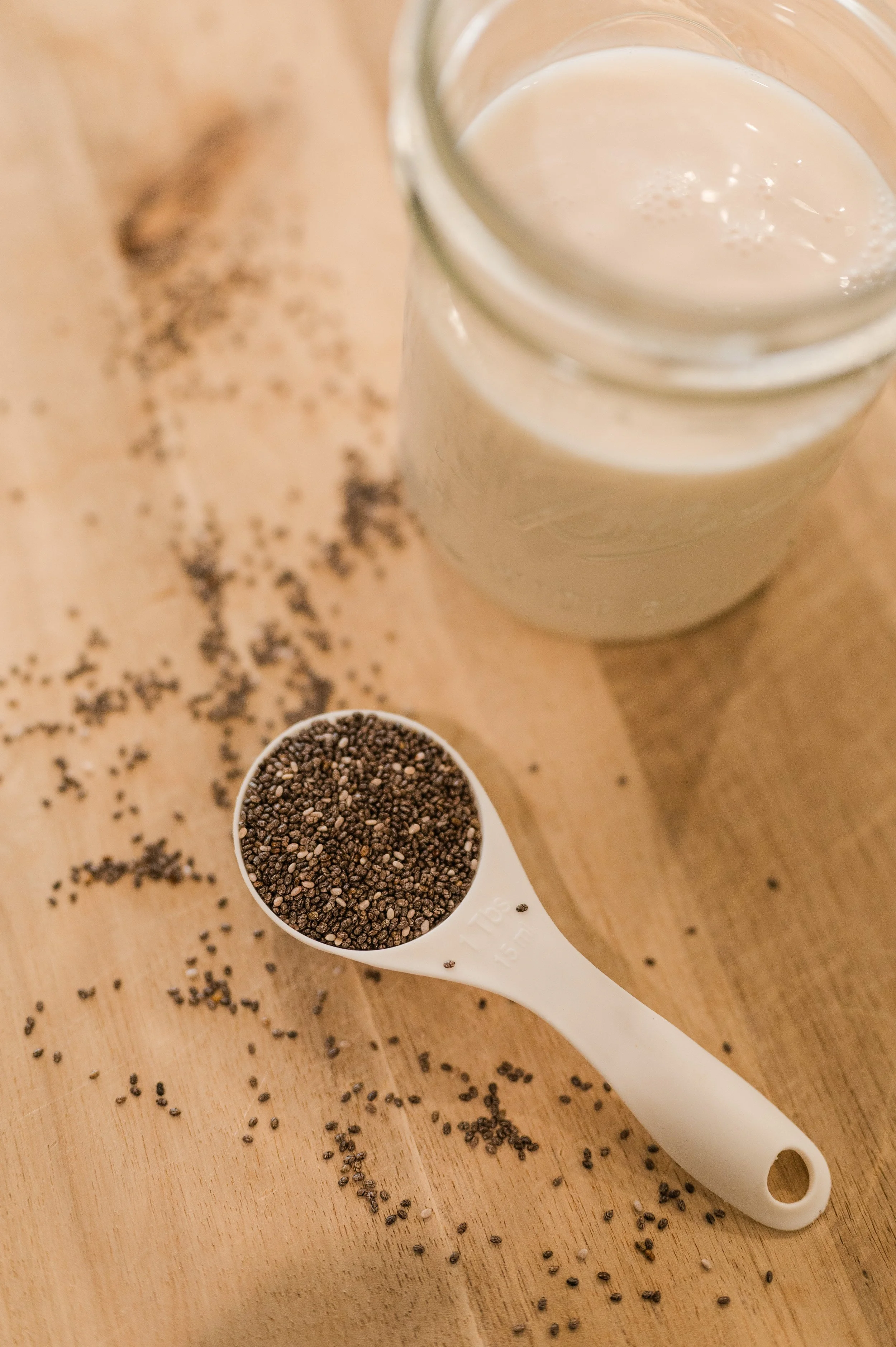
Fiber: The Unsung Hero of Gut Health
Chia seeds are one of the most fiber-dense whole foods available.
Just two tablespoons provide approximately 9–10 grams of fiber, with a powerful mix of both soluble and insoluble fiber.
This combination helps:
Add bulk to stool
Support regularity
Improve digestive efficiency
Promote smoother elimination
Fiber isn’t just about staying “regular.” It plays a key role in blood sugar control, cholesterol balance, and feeding your gut bacteria. The soluble fiber in chia seeds acts as a prebiotic, which means it feeds the beneficial bacteria living in your gut.
When chia slows gastric emptying, it increases the production of short-chain fatty acids—compounds that help nourish and protect the intestinal lining. A healthy gut lining supports better immunity, reduced inflammation, and improved nutrient absorption.
Think of chia as food for the good bugs that take care of you from the inside out. Chia seeds don’t stop at fiber. They also provide:
Omega-3 fatty acids (ALA)
Antioxidants
Magnesium
Calcium
Plant-based protein
These nutrients support heart health, bone strength, inflammation balance, and overall cellular function. Small seed… big impact.
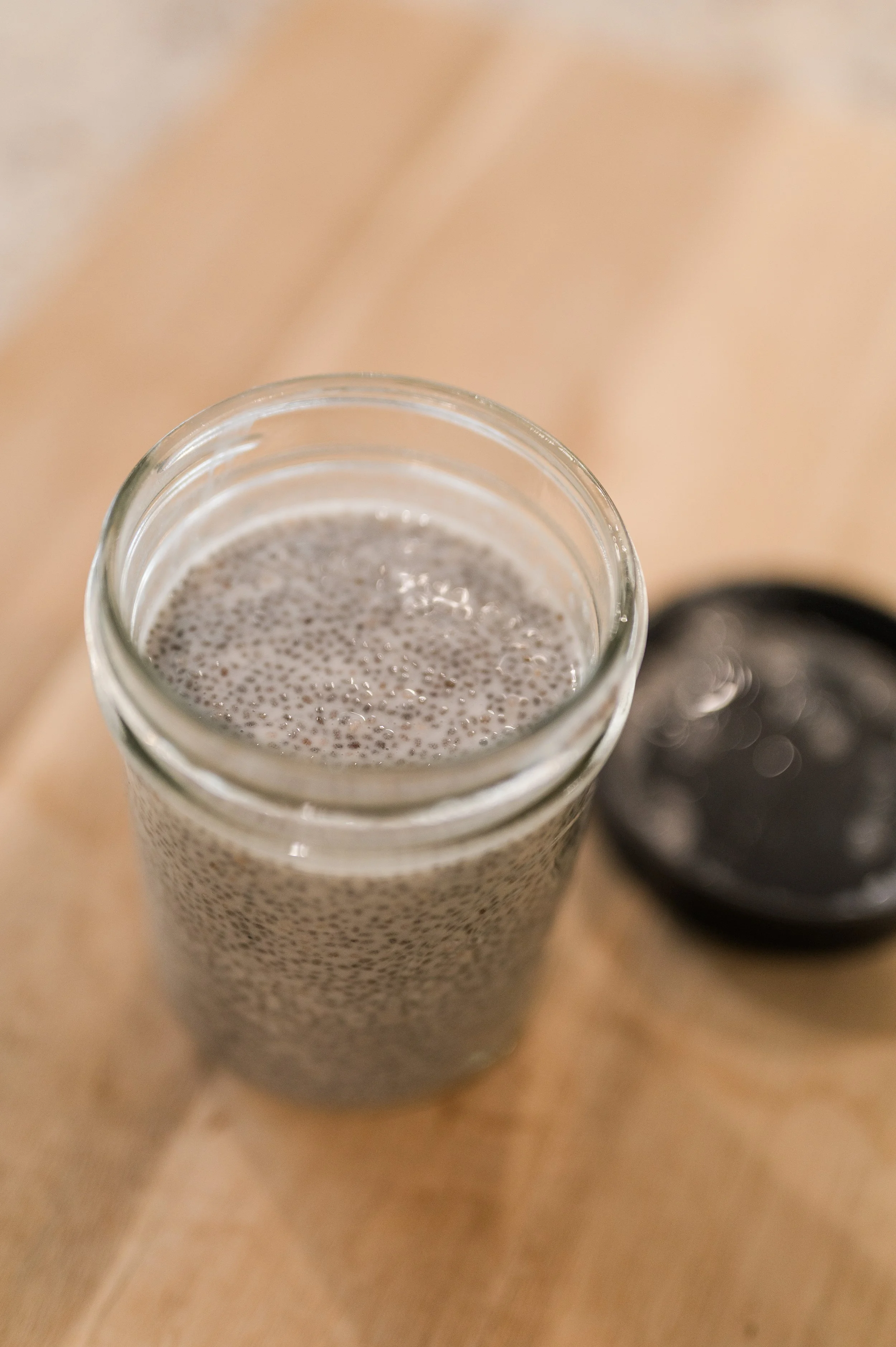
The Best Way to Eat the Mighty Seeds
One of the easiest and most effective ways to enjoy chia is by keeping chia pudding in your fridge. Hydrated chia is easier to digest and more beneficial for your gut.
Simple Chia Pudding Recipe
Add 6 tablespoons of chia seeds to a pint-sized glass jar
Fill to the top with unsweetened almond milk
Secure the lid
Gently shake every minute for 5–7 minutes until the chia stays suspended
Store in the fridge for up to one week.
That’s it. No cooking. No stress. Just simple nourishment ready to go.
Once you’re pudding is all prepped, the options are endless! Here are just a few ways to use your chia pudding:
Stir into yogurt
Add to cookie or bread dough
Mix into pancake batter
Fold into an egg omelet
Spread on toast with honey and peanut butter
Soak into kefir
Blend into salad dressings
Add to kombucha
Mix into smoothies
Chia fits beautifully into both sweet and savory meals, making it one of the most versatile gut-supporting foods you can keep on hand.
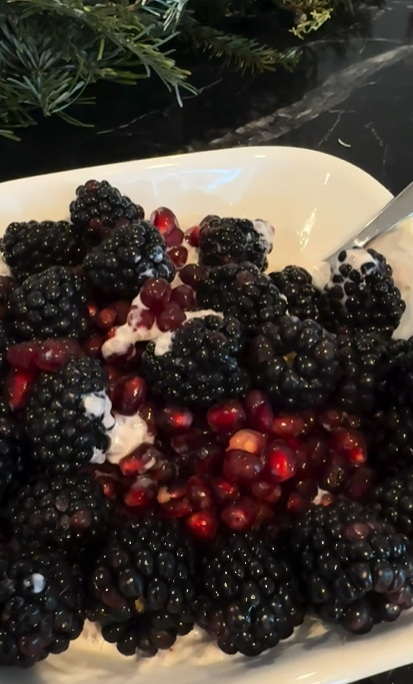
Pomegranate Black Berry Chia
Give this a try! I love to add a little chia pudding with Greek yogurt, then top it off with a handful of black berries, and pomegranates! It is SOO good!
I am obsessed with this combo! It is delicious, filling and even better than candy! If that doesn’t convince you, then you’ll love to know that this combo packs over 10g of fiber, and sickness fighting anti-oxidants!
Pro Tips for Success
Start with 1 tablespoon daily and increase gradually. When possible, soak or hydrate chia before consuming. Always pair fiber with adequate fluids.
Remember: fiber works best consistently in small amounts, not in large doses.
Your gut thrives on gentle, steady support—not extremes.
Small Seed, Big Return
Gut health doesn’t have to be complicated. Sometimes the most powerful changes come from the simplest habits.
A small daily seed habit can lead to: Better digestion, more stable energy, reduced inflammation, improved nutrient absorption, and a healthier, happier microbiome! Your body was designed to heal, thrive, and function beautifully—sometimes it just needs the right tools! Chia seeds are one of those simple, mighty tools.
Ready to make your own chia pudding? Check out this video and more on my Instagram @live.right.nutrition! I post weekly tips, and insights to help you on your journey to optimal health!
Frequently Asked Questions
What can I use instead of almond milk for chia pudding?
Almost anything! You can use regular cow’s milk, oat milk, coconut milk, or even a mix of Greek yogurt and water. Chia seeds are flexible and will gel in most liquids.
Do you sweeten your yogurt before mixing in chia pudding?
Nope! I love G2 yogurt, but any yogurt works. Some of my favorites are Vanilla Greek Yogurt from Trader Joe’s or Plain Greek Yogurt from Costco. If you prefer it sweeter, a drizzle of honey is a great natural option.
What’s the best way to add chia pudding to kefir?
After you add your fruit to the kefir, stir in the chia pudding. Let the mixture sit for about 10 minutes, shaking or stirring occasionally so everything blends well.
Where should I buy chia seeds, and what brand is best?
Look for organic chia seeds whenever possible. I regularly buy mine from Costco, but most grocery stores carry great options.
Is there a nutritional difference between soaked chia seeds and dry chia seeds?
I love this question! Chia seeds can absorb up to 27 times their weight in water. When they’re soaked, the fiber is essentially “pre-hydrated,” which makes them gentler on the digestive system and less likely to cause bloating or discomfort.
Soaking helps support smoother digestion—but the nutritional value stays the same either way. The exception? Sprinkling them into granola or mixing them into cookie dough can still be beneficial, especially since that gel-like texture is exactly what your gut loves.